what cause the eye to feel like it squeezing
Heart Belch: What Causes "Sleep" in Your Eyes?
- What is eye discharge?
- Where does eye mucus come from?
- Causes of heart discharge
- Eye discharge treatment
- At-home checklist
- Babies and blocked tear ducts

What is eye discharge?
Eye discharge, or "sleep" in your eyes, is a combination of mucus, oil, pare cells and other debris that accumulates in the corner of your eye while you sleep. It can be wet and gummy or dry out and crusty, depending on how much of the liquid in the discharge has evaporated.
Other slang terms used to describe eye discharge include eye mattering, eye boogers, eye gunk, middle pus and goopy eyes.
Sometimes called "rheum," eye discharge has a protective function, removing waste products and potentially harmful debris from the tear moving-picture show and the front surface of your eyes.
Your optics produce mucus throughout the twenty-four hours, but a continuous thin film of tears bathes your eyes when y'all glimmer, flushing out the rheum earlier it hardens in your eyes.
When you're asleep — and not blinking — eye discharge collects and crusts in the corners of your eyes and sometimes along the lash line, hence the term "sleep" in your eyes.
Some sleep in your eyes upon waking is normal, just excessive eye belch, especially if it'southward green or yellow in color and accompanied past blurry vision, light sensitivity or eye pain, tin can indicate a serious centre infection or middle illness and should be promptly examined past your middle doctor.
Where does eye mucus come up from?
Eye belch (rheum) is a part of your tear film and a necessary component of good heart health. It primarily consists of thin, watery mucus produced by the conjunctiva (chosen mucin), and meibum — an oily substance secreted by the meibomian glands which helps keep your eyes lubricated betwixt blinks.
Causes of eye discharge
Slumber in your eyes ordinarily isn't cause for alarm, only if you notice a difference in consistency, color and quantity of eye gunk, it could indicate an middle infection or disease.
Common middle weather associated with abnormal centre discharge include:
Conjunctivitis
Eye belch is a mutual symptom of conjunctivitis (pinkish center), an inflammation of the conjunctiva — the thin membrane that lines the "white" of the eye (sclera) and the inner surface of the eyelids.
Thick, yellow eye discharge can be caused by an middle infection. 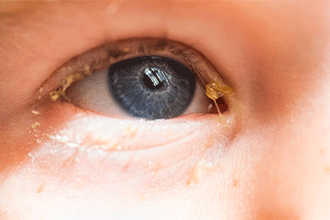
In addition to itchy, gritty, irritated and blood-red eyes, conjunctivitis typically is accompanied by white, xanthous or green eye mucus which can form a chaff forth the lash line while you sleep.
In some cases, eyelid crusting can be so severe that it temporarily seals your eye shut.
At that place are iii types of pink eye: viral, bacterial and allergic.
Viral conjunctivitis is highly contagious and is acquired by a virus such equally the common cold or herpes simplex virus. Eye discharge associated with viral pink eye typically is clear and watery, but may include a white or light yellowish mucus component.
Bacterial conjunctivitis, as the name indicates, is caused by bacterial infection and can exist sight-threatening if not treated promptly. Centre discharge is usually thicker and more pus-like (purulent) in consistency than viral pink eye, and is commonly yellow, green or even grey. Often, the viscid mattering will crusade your eyelids to experience completely glued shut upon waking in the morning.
Allergic conjunctivitis is triggered by allergens — pollen, dander, dust and other mutual irritants that crusade centre allergies. It also can exist acquired by an allergic reaction to chemic pollutants, makeup, contact lens solutions, and eye drops. Eye belch associated with allergic conjunctivitis is typically watery.
Dissimilar viral and bacterial pink eye, allergic conjunctivitis is non contagious and always affects both optics.
Other middle infections
In improver to conjunctivitis, there are many eye infections that cause abnormal heart belch. These include: eye herpes (a recurrent viral eye infection), fungal keratitis (a rare but serious inflammation of the cornea) and Acanthamoeba keratitis (a potentially blinding infection typically caused by poor contact lens hygiene or swimming while wearing contacts).
Discharge from an eye infection varies considerably — it could be clear and watery or thick, light-green and gluey — so make sure you come across your eye doc promptly for an accurate diagnosis and treatment.
Blepharitis
A chronic disorder of the eyelids, blepharitis describes either inflammation of the eyelash hair follicles or aberrant oil production from the meibomian glands at the inner edge of the eyelids. A related status called Meibomian gland dysfunction (MGD) tin cause foamy heart discharge, eyelid crusting, too equally yellow or green eye pus, amongst other irritating and often painful symptoms.
Stye
A stye is a chock-full meibomian gland at the base of the eyelid, typically caused by an infected eyelash follicle. Also called a hordeolum, it resembles a pimple on the eyelid margin and is commonly accompanied by redness, bloated eyelids and tenderness in the affected surface area. Yellowish pus, eyelid crusting and discomfort while blinking also can occur.
An centre stye usually resolves on its own, but there are besides some dwelling house remedies for styes you can try. It'due south of import to refrain from squeezing the pus from a stye to reduce the risk of the infection spreading to other areas of the middle.
SEE ALSO: Why yous should never pop a stye
The tear drainage system keeps the eye moist and protected.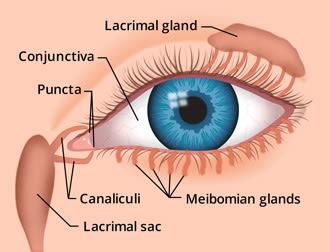
Dry out eyes
Insufficient tear production or dysfunction of the meibomian glands can lead to dry centre syndrome — an often chronic status in which the surface of the optics is not properly lubricated and becomes irritated and inflamed.
Symptoms of dry optics include red, bloodshot optics, a burning awareness, blurry vision and a feeling something is "in" your eye (foreign body awareness). Sometimes, dry eyes also tin cause a very watery eye discharge to occur.
Contact lenses
If you wear contact lenses, you may discover more sleep in your eyes than normal. This tin exist due to a number of reasons, including a contact lens-related heart infection, contact lens discomfort resulting in dry and irritated eyes, equally well as rubbing your eyes more while wearing contacts.
If you feel an increment in eye discharge when wearing contacts, remove your lenses and see your center doc to rule out a potentially serious eye condition.
Eye injury
A strange torso in the centre (such every bit dirt, droppings or a chemical substance) or an eye injury tin can cause your eyes to secrete a watery discharge as a natural protective response.
If centre pus or blood in the eye (subconjunctival hemorrhage) occurs after an center injury, see your middle doctor immediately for treatment. All middle injuries should exist treated as a medical emergency.
Corneal ulcer
A corneal ulcer is a sight-threatening, abscess-like infection of the cornea, normally caused by trauma to the center or an untreated centre infection. If non treated promptly, corneal ulcers tin can pb to complete vision loss. Centre pain, redness, bloated eyelids and thick eye belch are characteristic of a corneal ulcer. Eye pus can be so astringent that it clouds the cornea and impairs vision.
Dacryocystitis
When a tear duct is blocked, the lacrimal sac in the tear drainage system leading to the olfactory organ can go inflamed and infected, causing a tender and swollen bump to appear under the inner eyelid. In improver to hurting and redness, common symptoms of dacryocystitis include watery eyes, a sticky eye discharge and blurred vision.
Eye discharge treatment
A small amount of eye belch is harmless, but if y'all notice changes in the color, frequency, consistency and amount, consult your eye medico.
If an eye infection is the cause of centre mucus, your eye care practitioner may prescribe antibiotic or antiviral center drops and ointments. If eye allergies are making your optics watery and irritated, over-the-counter antihistamine eye drops and decongestants may salvage symptoms.
Warm compresses placed over your eyes may assistance relieve symptoms of itching and general centre discomfort, also as assistance remove eye broth.
If your eyelids are stuck together, the best way to "unglue" your lids is to moisture a washcloth in warm water and place it over your optics for a few minutes before gently wiping abroad the eye gunk.
At-dwelling house checklist
Follow these uncomplicated tips to avoid or manage center discharge:
-
Refrain from touching your eyes to avoid the onset or spread of an eye infection.
-
Wash your hands frequently, especially if you have contagious pink center.
-
If you experience eye belch when wearing contacts, remove your lenses and see your heart doc. Sometimes switching to daily disposable contacts or a dissimilar contact lens material can reduce the risk of contact lens-related belch.
-
If you have an eye infection, discard whatever potentially contaminated cosmetics such equally mascara and eyeliner, likewise as current contacts, which may be contaminated.
-
If allergies are the cause of your watery eyes, investigate your surroundings and try to remove or minimize your exposure to the irritants. And if you're sensitive to center drops, endeavour using preservative-gratis drops.
Note for Parents

Babies and blocked tear ducts
Many babies are born with obstructed tear ducts — the tubes that drain tears from the surface of the eyes to the nasal crenel — causing watery eyes and (sometimes) heart discharge.
Symptoms of a blocked tear duct include a abiding pooling of tears in the eye (even when the child isn't crying), which tin can spill onto the cheek. Viscous eye mucus too may exist present, specially collecting on the eyelid margin and causing the eyelashes stick together.
To help relieve symptoms, proceed the area clean by regularly wiping your infant's eyes with a clean, moist cloth. Gently massage the inner corner of your infant'due south eyes to aid to open or unblock the tear duct.
While well-nigh cases of blocked tear ducts resolve over the first several months of a child'southward life, at the kickoff signs of a blocked tear duct always see your baby's eye physician for a comprehensive eye exam to rule out a more serious trouble.
If your infant'southward eyes are producing a thick yellow or dark-green discharge, or there is redness and swelling around the optics, this could indicate an center infection that should be evaluated past your eye md straightaway.
SEE RELATED: Middle discharge in toddlers and babies
Page published in March 2019
Folio updated in January 2022
Medically reviewed in April 2021
Source: https://www.allaboutvision.com/conditions/eye-discharge.htm
0 Response to "what cause the eye to feel like it squeezing"
Post a Comment