Commentary: Being forced to log on to work from home created stress and fatigue for workers
SINGAPORE: Coupled with employees reporting decreased mental health in 2020, managers now face up new challenges stepping into the new year's day.
Co-ordinate to a Qualtrics study in Singapore in April 2020, 26 per cent of employees surveyed reported a decrease in mental wellness.
Out of these, 25 per cent reported a decrease in mental well-beingness due to stress, 22 per cent due to feet, 19 per cent due to job insecurity, 7 per cent due to fatigue, and 6 per cent due to work-from-home (WFH) arrangements.
That wholesale leap into WFH might have a lot to do with it. According to a study by Mercer South and East Asia in April 2020, WFH arrangements have been especially difficult for managers, with 39 per cent reporting they were less effective at work than before, compared to 22 per cent of non-managers.
READ: Commentary: 5 New year's day resolutions every director should have subsequently a really tough yr for workers
WHY WFH CAUSES STRESS AND FATIGUE
What is the relationship between working from dwelling house and mental health? A 2022 report on job connectedness that I did with Professor Remus Ilies from the National University of Singapore might accept the answer.
Seeking to understand employees' attitudes to using ICT devices to attend to work matters remote, the study examined how using engineering for work can affect work-family boundaries and personal well-existence.

This experience sampling written report surveyed 115 employees working total-time in Singapore and showed that chore connectedness on its own did not have pregnant effects on well-being.
The relationships, however, inverse when we look at the fit betwixt employees' values and the current work arrangement.
Job connection led to increased well-existence (including higher job satisfaction, lower burnout, and lower piece of work-family disharmonize), when engaging in such behaviour was voluntary.
When connecting to the job via ICT devices was involuntary, employees experienced lower levels of well-being.
READ: Commentary: After a year of working from home, I am exhausted. I just want information technology to stop
In other words, when employees, on their own accord, connect to work matters remotely, that brings them higher satisfaction.
Plausibly, this is because employees feel empowered, motivated and in command of their piece of work tasks and career trajectory. Choosing when and where to do their work can account for conflicts in their personal and family schedules equally well.
Even so, when this was involuntary, their mental wellness and personal well-being suffered. Piece of work-family conflict and the feeling of burn down-out were exacerbated, and job satisfaction was reduced.
READ: Commentary: Cure to burnout requires a pervasive culture of residuum
READ: Commentary: What's backside burnout? Confusing long hours and confront time for work performance
A 2022 study that I did with Assistant Professor Lucas Monzani from the Ivey Business School plant that when beingness connected to the chore is perceived as an obligation, or as an additional demand, engineering science is not as welcomed by employees.
Did the employee sense that he has to reply to that email while attending to the crying toddler at home? Did the individual have to pick up that phone telephone call when she was making lunch? Depending on signals received by employees from their organisations, using ICT devices for remote piece of work tin be helpful or dreadful.
ALL ABOUT FIT
In most cases, culling work arrangements were made possible for the employees in this written report. Organisations provided resources like laptops, mobile phones, and flexible working hours.
One might recollect that this is the one-size-fits-all reply: Provide the resources, and employees will use technology to become to work. Merely the answer goes across providing resources.
It is all near fit. Did employees want to connect to the job remotely, considering this gives them greater flexibility in fulfilling work and family duties? Or did they wish to go on their jobs and family unit life separate?
READ: Commentary: The cult of work is eroding the value of parenthood
READ: Commentary: Despite flexible piece of work arrangements, work stress has worsened
For some others, having a difficult cut-off time for piece of work gives them the liberty to fully immerse in family and social activities.
WHEN FLEXIBLE WORK ISN'T A CHOICE
But the COVID-19 pandemic and mandatory WFH arrangements across non-essential services resulted in employees not having much of a choice in whether to be digitally continued to the job.
Their values were not aligned with the company's new ones, and they did not have fourth dimension to adapt.
Yous might say this arrangement was only obligatory during office hours. Indeed, many cognition workers have engaged in flexible work or remote work in one way or another prior to the pandemic, but the reality is very few of them did this full-time.
According to the United States Agency of Labour Statistics, merely 5 per cent of workers were working near full-time, whereas this effigy was half dozen per cent in the European Union.
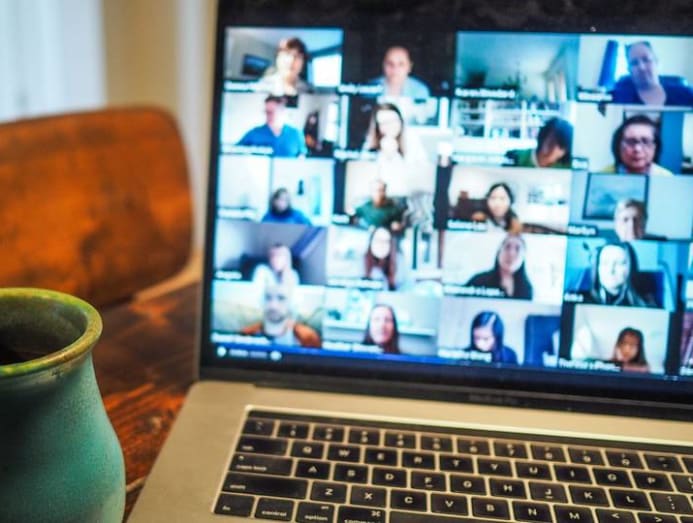
The sudden shift to full-fourth dimension remote work meant that employees apace lost their ability to appreciate face-to-face interactions with colleagues, leading to feelings of isolation and decline in mental health.
Employees entered an arrangement thinking they were a good fit with the company's civilization of teamwork and work-life remainder, merely to observe themselves alone and having to mix piece of work with family.
ENSURING FIT
So, how should managers enter 2021? The answer lies in ensuring fit.
The COVID-19 pandemic has tested companies' power to be agile and to embrace digital technology. When hiring new talent, recruiters should ensure that agility and resilience are amongst the top criteria for selection.
Agility and resilience can be assessed using personality tests and competency-based interview questions. When workers are active, they tin respond to piece of work challenges flexibly and creatively.
For instance, they can meliorate suit to WFH arrangements by creating their own personal boundaries, such as working from a quiet infinite in the firm away from distractions.
Listen as well to property experts discuss whether and how the outlook for the Singapore residential market place has inverse with COVID-19 and why they say it seems to be holding upward exceptionally well:
For their electric current talent, managers should ensure that employees are equipped with the necessary preparation to acquit their work tasks effectively using applied science and ICT devices.
This goes beyond technical skills and should include soft skills like effective virtual communication, email etiquette, and ground rules for video conferences.
RESOLUTIONS FOR MANAGERS
Understanding that there is no i-size-fits-all answer is a starting time step. Managers should take time to understand employees' needs and preferences with regards to using engineering science to work from domicile.
Often, accompanying provision of resources with articulate communication volition help.
For instance, managers could allay employees' concerns by maxim that a piece of work mobile phone does non mean the employee will have to be contactable 24 hours a twenty-four hours.
By demarcating specific timings or tasks for which the mobile telephone will be used, managers help to reduce anxiety associated with job connexion, as employees know they have opportunities to disconnect and unwind from piece of work.
READ: Work in part, from home, or both? Hybrid work has potential and pitfalls, say experts
READ: Commentary: Co-working spaces look pretty attractive right about now
Managers themselves need to embrace engineering science to comport their work more effectively.
With more than trust, empathy, and clearer (virtual) communication with employees, companies can still stick to their yearly resolution: The next twelvemonth will be the all-time year e'er.
Can you lot say no to returning to the office? Nosotros posed this question to one CEO and 1 HR proficient in our Center of the Matter podcast:
Dr Rashimah Rajah is a lecturer in the Section of Management & Arrangement at National Academy of Singapore (NUS) Concern School. The opinions expressed are those of the author and practice not correspond the views and opinions of NUS.
Source: https://cnalifestyle.channelnewsasia.com/commentary/commentary-being-forced-log-work-home-created-stress-and-fatigue-workers-276661
0 Response to "Commentary: Being forced to log on to work from home created stress and fatigue for workers"
Post a Comment